The Death of the Self-Taught Hacker: Why Restricting AI to Big Tech Is a Threat to Everyone
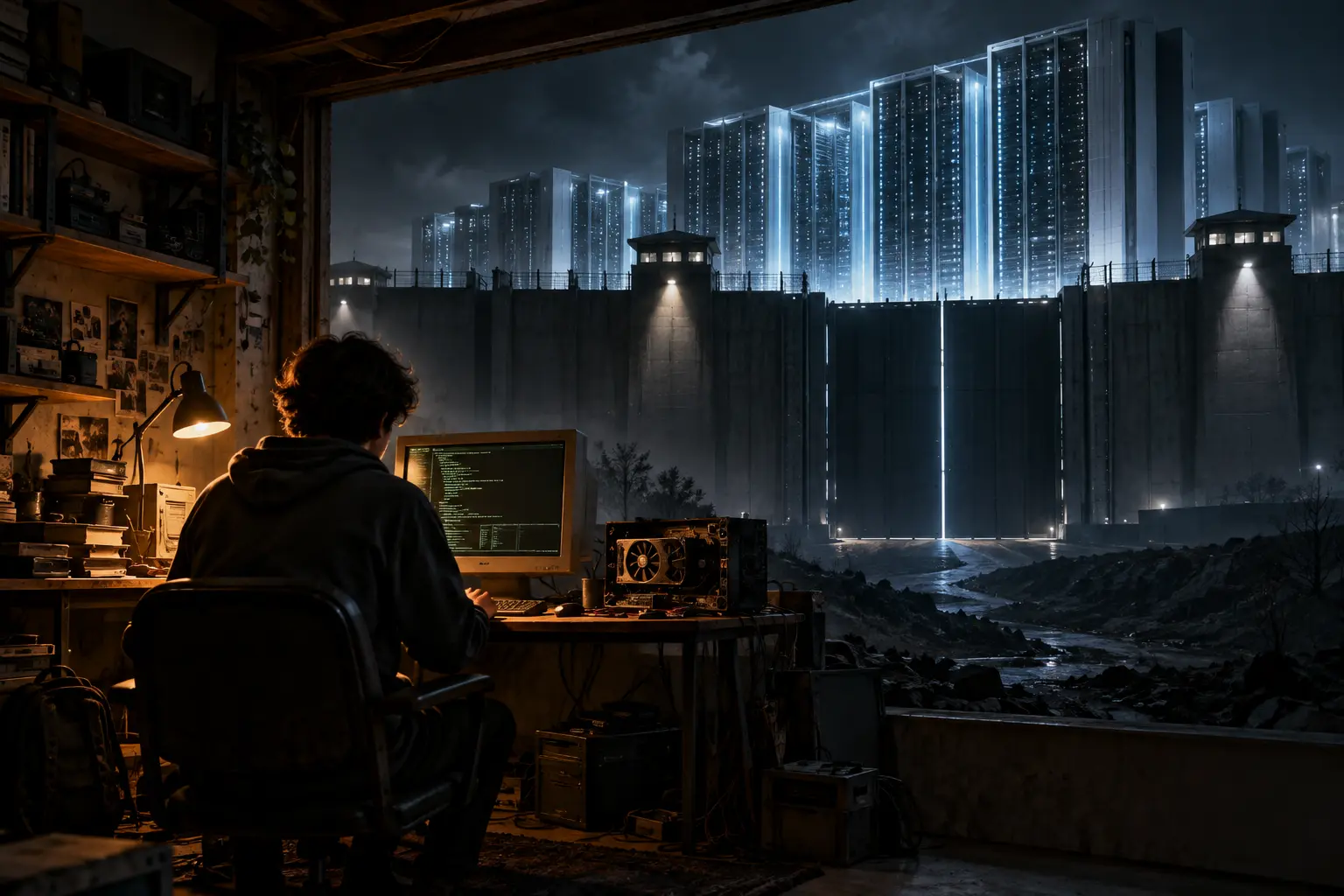
If you grew up the way a lot of us did, your tech education didn’t happen in a sterile corporate classroom or a university lecture hall. It happened late at night in a dimly lit room, staring at a monitor, teaching yourself how a PC works because you wanted to pull back the curtain and see what made things tick. You figured out the internet when AOL was new, spent time around people in hoodies and masks on forums or IRC networks, and built your skills from scratch. You might never have gotten your hands completely “dirty” in actual mischief, but the capability was always there—fueled purely by curiosity and open access.
That self-taught dream is precisely what current AI regulations threaten to kill for millions of kids who are just like you.
When you look past the viral panic of “banned home servers,” the real, underlying danger isn’t that a home lab will suddenly be raided. The real danger is a future where advanced AI technology is legally locked behind a corporate-and-government-only paywall.
The Dangerous Illusion of Centralized Safety
There is a profound truth in what Mark Zuckerberg and other open-source advocates have argued: AI is far more dangerous when only a select few possess the tools, and drastically less dangerous when everyone has access to them.
If regulation concentrates all frontier AI compute and model weight development into the hands of a few trillion-dollar cloud monopolies and state-sanctioned bodies, we aren’t creating safety. We are creating a technological monopoly wrapped in a national security blanket.
When only massive tech giants and governments are allowed to build, fine-tune, and explore advanced models:
- Innovation Stagnates: Breakthroughs stop coming from independent hackers in basements and start coming exclusively from corporate boardrooms focused on monetization and compliance.
- The Barricade Goes Up: The next generation of self-taught programmers won’t have a local Llama model or open weights to pull apart, modify, and learn from. They will be treated as potential threats or consumers rather than creators.
- A Single Point of Failure: Centralized, heavily guarded systems create massive single points of failure. If a small handful of elite corporations control all advanced intelligence, society loses the resilience, diversity of thought, and transparency that only a vibrant open-source ecosystem provides.
Killing the Spark That Built the Tech Industry
The tech industry as we know it was built by hobbyists, autodidacts, and rule-breakers who had low-barrier access to powerful tools. You didn’t need a multi-million-dollar venture capital fund or a government clearance badge to build something transformative in the 90s or 2000s; you just needed a computer, an internet connection, and an insatiable desire to learn.
Bills that criminalize unauthorized frontier research, track consumer-grade hardware, or push compliance frameworks so heavy that only Big Tech can afford them do more than regulate software. They pull up the ladder. They send a clear message to the kid sitting in front of a secondhand graphics card in their bedroom: innovation is reserved for the certified elite.
If we let regulators and corporate lobbyists lock down AI under the guise of safety, we aren’t just losing home servers. We are losing the exact environment that birthed modern computing. And that is a risk far greater than any model running unconstrained on a basement rig.